
Affiliate Disclosure: This post contains affiliate links. As I am a part of the eBay Partner Network and other programs, if you follow these links and make a purchase, I’ll receive commission. As an Amazon Associate, I earn from qualifying purchases.
Disclaimer: This is not buying or investment advice. I’m simply reporting the data I’m seeing. Please do your own research and make your own decisions. Just because cards have increased in value up to this point, it doesn’t mean they will continue to do so.
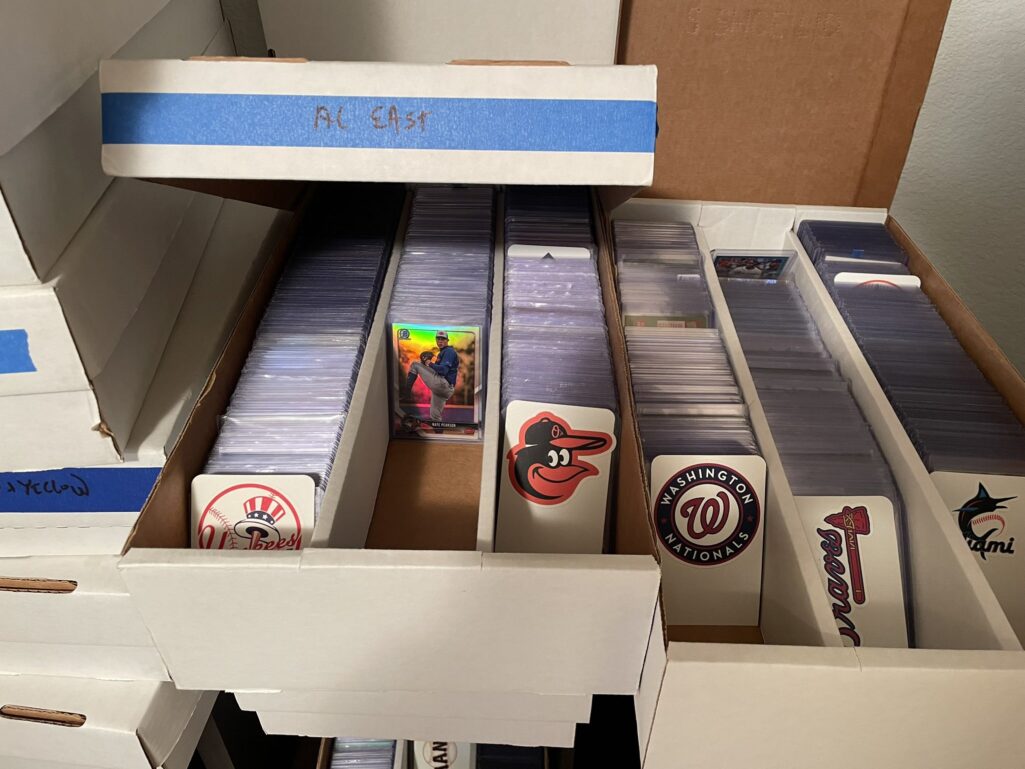
I’ve sold over 10,000 sports cards across eBay, CollX, and COMC. Most were singles, not mystery bulk lots. Selling singles forces you to understand pricing, platforms, presentation, and process.
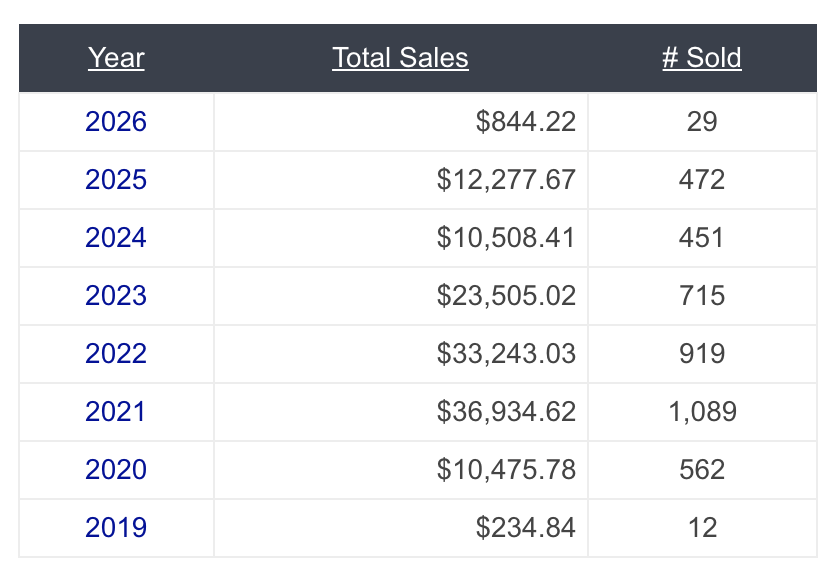
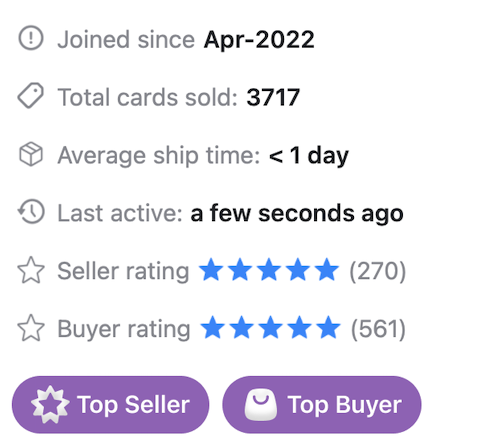
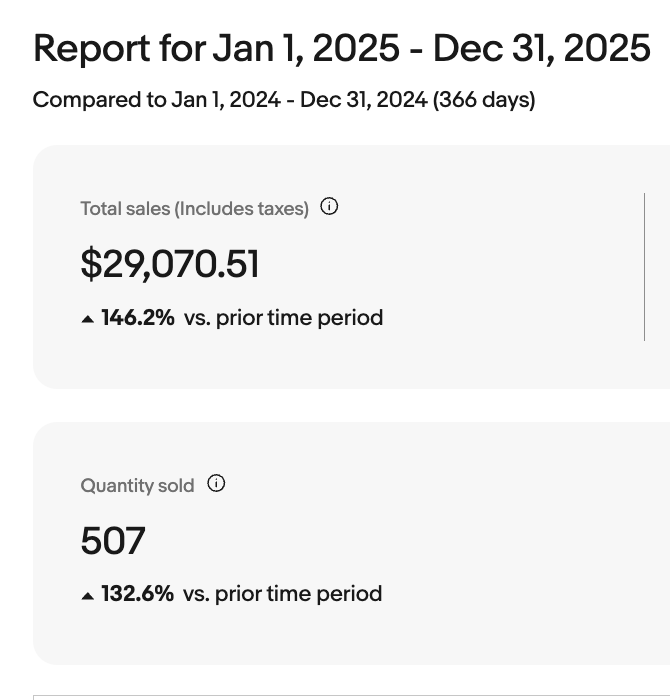
Here are my sales stats from COMC, CollX, and eBay:
This is a guide to selling sports cards. Flipping is a separate skill. Selling is about maximizing value on cards you already own while keeping your time and effort under control.
Step 1: What Are You Actually Selling?
Before listing anything, sort your cards into different categories:
1. True Bulk: Commons, junk wax, base cards with lower demand.
2. Sellable Singles: Stars, rookies, inserts, parallels, serial-numbered cards, short prints, desirable sets.
3. Higher-End Cards: Vintage, rare parallels, graded slabs, scarce modern, anything you would regret underpricing.
Start simple, stay simple. Many people get overwhelmed even before getting started.
Look for:
- Star power
- Era (vintage, junk wax, modern)
- Scarcity (numbered, short print, case hit)
- Condition (corners, edges, centering, surface)
- Current trends or hype
Do not treat everything like bulk if some of it deserves a specialized approach.
Step 2: Use eBay as Your Primary Valuation Tool
There are many apps for scanning and pricing. I’ve used more of them. But eBay remains the most reliable valuation source because it reflects real transactions.
Why eBay works:
- Massive transaction volume
- 3 years of accessible sales data
- True market behavior, not guide pricing
- Easy “Sold Items” filter
To check comps:
- Search the exact card (player, set, year, card number, parallel)
- Filter by “Sold Items”
- Compare recent sales
- Check current listings for competition
For anything rare, you can always check the eBay research tool. Go to sell -> research -> product research.

Important: Sold listings do not always show the final accepted Best Offer price. For those cases, use the 130 Point sales tool to see the actual sale amount.
I put a lot of weight on current listing value versus sold comps and this is why…
If three recent sales show $20, $25, and $30 — but there is a current listing sitting at $15 — you cannot realistically price at $30 and expect action.
Pricing is relative to active supply.
Step 3: Choose the Right Selling Platform
There is no single best app for every card.
Here’s how I think about it:
eBay
- Largest buyer pool
- Best liquidity
- Most pricing transparency
- Higher fees
CollX
- Scan and list directly in-app
- Fast listing process
- Good for volume singles
COMC
- Consignment model
- You send cards in
- They scan, list, and ship
- You manage pricing
Facebook Marketplace
- Local sales
- Best for bulk or quick cash
If you want maximum exposure, eBay is still king.
If you want less handling and shipping work, consignment platforms like COMC make sense.
If you want local convenience, Facebook Marketplace works well for bulk.
Are there other options? Of course. There are tons. But again, stay simple. Once you get familiar with selling sports cards it becomes a lot easier to branch out.
Also, learn to live with fees. It’s just part of the deal. eBay gets you the most eyeballs, so I can live with their fees being highest.
Want a quick look at what your fees might be? Try this tool—enter your predicted sales amount and then check out the breakdowns.
Sports Card Fee Calculator
Enter the total amount you expect to sell the card for
- Check recent sold listings
- Review active listings
- Consider card condition
Quick Comparison
| Platform | Fee | Receive | Details |
|---|
* COMC: Additional fees may apply based on seller tier and listing type
All Platforms
Click to view complete fee breakdown for each platform
All Platforms
Complete fee breakdown for each platform
Step 4: Enable Offers (Always)
The market moves fast. Allowing “Best Offer”:
- Helps correct pricing errors
- Increases buyer engagement
- Encourages watchers to convert
- Gauges market interest
Yes, you will receive lowball offers. Ignore them. Decline them. Counter them. It is part of selling. Don’t lose sleep over them.
On the other hand, I’ve skipped buying cards simply because the seller did not allow offers. It’s a must in my book.
Step 5: Use Watchers Strategically
Watchers on your cards are signals. Pretty much every platform gives you guidance into how many potential buyers are watching your cards.
If someone is watching your listing, it means they are interested, but price (or shipping) might still be a barrier.
Two effective tactics to feel them out. Send offers to watchers. Drop price by $5 or more to trigger notifications. Small pricing shifts can unlock stalled listings.
Step 6: Format Matters: Auction vs Buy It Now
Most of my listings are Buy It Now with Best Offer. Personal preference.
Many people like to utilize auctions when:
- A card has been sitting too long.
- They value the sale more than max profit.
- They want to test real demand.
Starting auctions too high suppresses bidding. Starting low increases engagement but requires comfort with potential downside.
Step 7: Shipping Strategy Drives Conversions
Buyers are sensitive to shipping costs.
Two practical moves:
Offer Free Shipping (Strategically): You can raise the card price slightly and advertise “Free Shipping.” Buyers respond well to simplicity. I personally don’t offer free shipping but plenty do.
Offer Standard Envelope Shipping for Lower-Value Cards: For sub-$20 cards, cheaper envelope options can increase conversions. This is big. Many sellers are “afraid” to ship cards this way, which I understand. But getting over it truly does open up your card-selling capabilities.
When selling and shipping higher-value cards:
- Use bubble mailers
- Use tracking
- Prioritize protection
Shipping decisions directly impact sell-through rate.
My personal shipping process for most cards:
- Cards in penny sleeves
- Penny sleeved card in top loaders
- Top loaded cards in team set bags
- Bagged cards between two pieces of cardboard
- Painters tape to secure the cardboard sandwich
- Whole thing into a bubble mailer
High value cards requires more. Most of you probably don’t need to worry about that yet.
Step 8: If You’re Selling Volume, Invest in Workflow
If you’re selling casually, a phone camera and a clean surface works. Lightboxes are cheap and easily improve your photo quality.
If you’re selling at scale, time per card becomes the bottleneck.
Here’s my setup:
Ricoh High-End Card Scanner: It’s expensive; close to $1,000. I won’t pretend it isn’t. But if you are serious about volume selling, it changes the math. Consistent, fast scanning saves hours every week.
Card Dealer Pro: If you are planning on volume selling, CDP is worth serious consideration. It helps streamline scanning, cropping, documentation, and listing workflows. Less manual friction means more listings live.
Jadens Label Printer: This is a must in my opionon. Printing clean labels quickly reduces errors and keeps shipping efficient. If you ship regularly, you will immediately feel the difference.
You do not need this equipment to sell 10 cards a month. If you are selling hundreds or thousands, it becomes well worth the investment.
Step 9: Separate Bulk From Singles
Bulk works best locally in my opinion:
- Facebook Marketplace
- OfferUp
- Card shows
- Local shops
Singles work best online. Trying to ship thousands of commons often destroys margin. Sell bulk for convenience. Sell singles for optimization.
Final Thoughts
Selling sports cards is a repeatable system:
- Sort intelligently
- Value using real sales data
- Choose the correct platform
- Enable offers
- Use watchers strategically
- Optimize shipping
- Invest in workflow if scaling
Once you understand how to sell efficiently, you can layer in flipping strategies later.
Selling is the foundation.
Frequently Asked Questions (FAQ)
Grading is not required, but it can add value to certain cards. Higher-end cards, vintage pieces, and cards with potential investment value often benefit from professional grading (PSA, BGS, CGC). For most modern singles and commons, ungraded sales work fine. Focus on accurate condition descriptions and clear photos instead. Only grade cards where the grading cost is justified by the expected price increase. For a point of reference, I’ve only graded and sold a handful of cards.
eBay offers the largest buyer pool and best liquidity but charges the highest fees. CollX lets you scan and list directly in-app with a faster process, making it ideal for volume singles. COMC is a consignment platform where you ship cards to them, they handle listing and shipping, and you manage pricing remotely—best if you want less hands-on work. Choose based on your priorities: maximum exposure (eBay), speed (CollX), or convenience (COMC).
I recommend using eBay’s “Sold Items” filter to find comparable cards (same player, set, year, card number, and parallel). Look at recent sales prices. Compare 3-5 recent sales to establish a range. Then check current listings to see active supply—if many similar cards are listed below your range, adjust lower. Remember: pricing is relative to active supply, not just historical sales.
Yes, absolutely. Allowing Best Offer helps correct pricing mistakes, increases buyer engagement, encourages watchers to convert, and gauges real market interest. You’ll receive lowballs—that’s normal. Decline them, counter them, or ignore them. Many buyers won’t even consider listings that don’t allow offers, so it’s worth enabling.
For standard cards: penny sleeve → top loader → team set bag → between two pieces of cardboard → painters tape to secure → bubble mailer. For sub-$20 cards, standard envelope shipping works and increases conversions. Always use tracking for anything over $20 and prioritize protection for valuable cards.
A base card is the standard version from a set. A parallel is a variant with different design, color, or finish (chrome, refractor, numbered, etc.). Parallels are typically scarcer and more valuable than base cards. When pricing, always specify the exact parallel type—collectors are specific about this. Use eBay comps to find the right parallel variant

Ryan Barone (“Ballcard Genius”) is a recognized sports card expert and lifetime collector. With nearly 27,000 TikTok followers and over 3,000 SubStack subscribers, Ryan loves talking cards, dishing tips, and building hobby communities. hello@ballcardgenius.com; Last Time Ago LLC dba Ballcard Genius.