
Affiliate Disclosure: This post contains affiliate links. As I am a part of the eBay Partner Network and other programs, if you follow these links and make a purchase, I’ll receive commission. As an Amazon Associate, I earn from qualifying purchases.
Disclaimer: This is not buying or investment advice. I’m simply reporting the data I’m seeing. Please do your own research and make your own decisions. Just because cards have increased in value up to this point, it doesn’t mean they will continue to do so.
The Sepia parallel is a type of Topps card that can be found in various products. This typically includes Topps Chrome and Stadium Club. Sepia refractors have a reddish-brown reflective finish, just as the name suggests with the card resembling sepia tone photographs with the same coloring.
While often confused with negative refractors and black & white parallels, sepia parallels have a distinct look that becomes obvious when compared against its counterparts.
Topps Chrome: Sepia Refractor vs. Negative Refractor
The Negative Refractor inverts the image entirely, turning the background light and the subject dark.
2023 Topps Chrome

Sepia Refractor

Negative Refractor
2024 Topps Chrome

Sepia Refractor
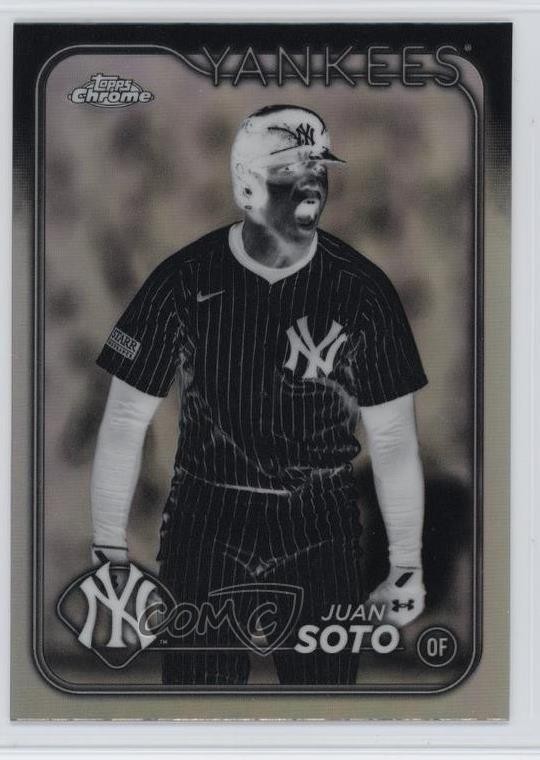
Negative Refractor
2025 Topps Chrome

Sepia Refractor

Negative Refractor
Topps Stadium Club: Sepia vs. Black & White
Stadium Club photography is already cinematic, so stripping the color hits differently here. The Sepia parallel adds a warm amber tone to the photo. The Black & White version goes full monochrome — no color whatsoever. Both parallels are unnumbered, making pop data harder to track, but the Black & White tends to be the rarer pull of the two.
2023 Stadium Club

Sepia

Black & White
2024 Stadium Club

Sepia

Black & White
2025 Stadium Club

Sepia

Black & White
Now, there’s a reason you’ll see sepia, chrome negative, and stadium club black & white cards dominating vintage-inspired product releases: collectors can’t get enough of that desaturated, nostalgic aesthetic. All three strip color from modern cards to create something that feels pulled from a different era, but they’re wildly different in execution, and that difference matters whether you’re hunting them for your PC or trying to grade them accurately.
That said, I’m not one of those collectors. To me, there isn’t a more frustrating parallel in all of the hobby.
First, when it comes to cards, it’s usually all love for me. Tacofractor? Cool. Tiny Kevin Hart variations. Let’s do it. There isn’t much that can phase me—I’m all for parallels, and even don’t mind the logofractor (but it’s far from my favorite).
But, I have issues with sepias for these reasons.
1. They aren’t pretty
Flat out, a Sepia refractor just doesn’t look good. Refractors, by name, are supposed to be shiny, and shiny usually means bright, vibrant, and cool. The Sepia refractor is none of that. It has refractor qualities but who wants a reddish brown baseball card when we have the technology to produce anything imaginable?
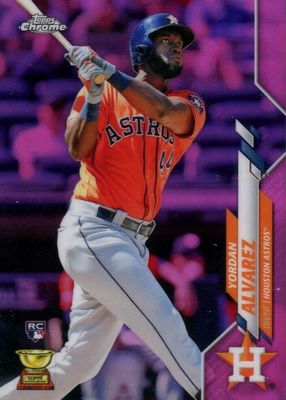
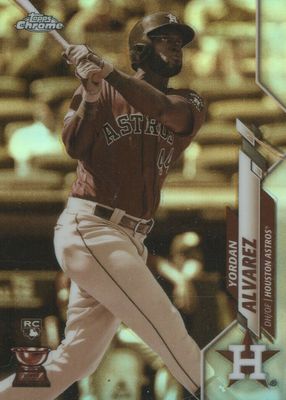
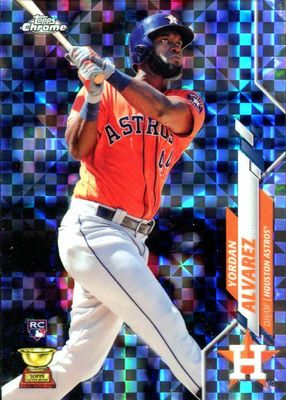
2. They aren’t worth a ton, relatively
I’m not saying they are worthless, because they are usually worth more than base refractors, but base refractors look cool at least. Plus, not every baseball card needs to be worth something. That said, if there isn’t much excitement around pulling a Sepia refractor, then why even include it.
Here is one example of a million, but this is where the Sepia stacks up when looking at 2020 Topps Chrome Yordan Alvarez rookie cards. These are 90-day averages for “raw” refractors:
- Negative Refractor $126
- X-Fractor $22.33
- Prism Refractor $16.22
- Base Refractor $12.13
- Sepia Refractor $11.08
- Pink Refractor $10.90
So on average, the sepia is selling for a few cents more than a Pink refractor. That’s right, a pink baseball card (they sure are pretty, though).
Of course, a lot of this is also based on odds, and not just looks. Here is Baseballcardpedia.com’s odds breakdown of 2023 Topps Chrome:
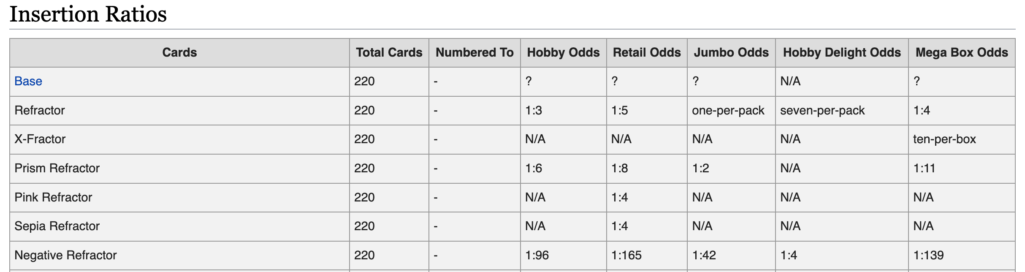
Deciphering the above, both the Sepia and Pink refractors are retail-exclusives, meaning they can only be found in retail products and they typically fall one in every four packs (1:4). Base refractors are slightly tougher in retail (1:5) but come 1:3 in hobby boxes. Negative refractors are 1:165 retail packs, meaning they are more rare (and hence, most valuable).
3. They are too similar to Negative Refractors
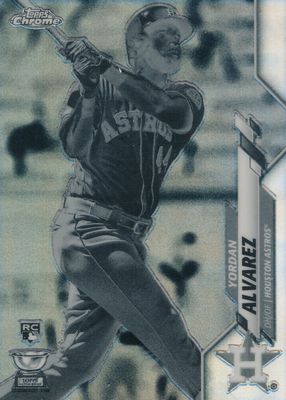
Now, you might be thinking, if I’m not a fan of Sepia refractors I must not like Negative refractors either. Well, you’re kind of right, but I still think Negative refractors are heads and shoulders above Sepias.
First, they look similar thanks to their lack of color, Negatives look cooler, like a liquid metal of sorts. They are bold and provide a clean photo outline where the Sepia just kind of looks mushy.
4. They are often mispronounced
I’m not a stickler for how things are pronounced in the hobby because things get confusing. Player names aside, you have the cello pack, which is often referred to as “chello” like the instrument, even though it should be “sello” as in “cellophane.” And with this, you have “seepia” not “sehpia.”
At the end of the day, we are still talking baseball cards, and I have love for them all. But if we are going to keep piling on refractors and parallels, we need to start kicking some to the curb to make room, and Sepia has my vote as the first to go.

Ryan Barone (“Ballcard Genius”) is a recognized sports card expert and lifetime collector. With nearly 27,000 TikTok followers and over 3,000 SubStack subscribers, Ryan loves talking cards, dishing tips, and building hobby communities. hello@ballcardgenius.com; Last Time Ago LLC dba Ballcard Genius.